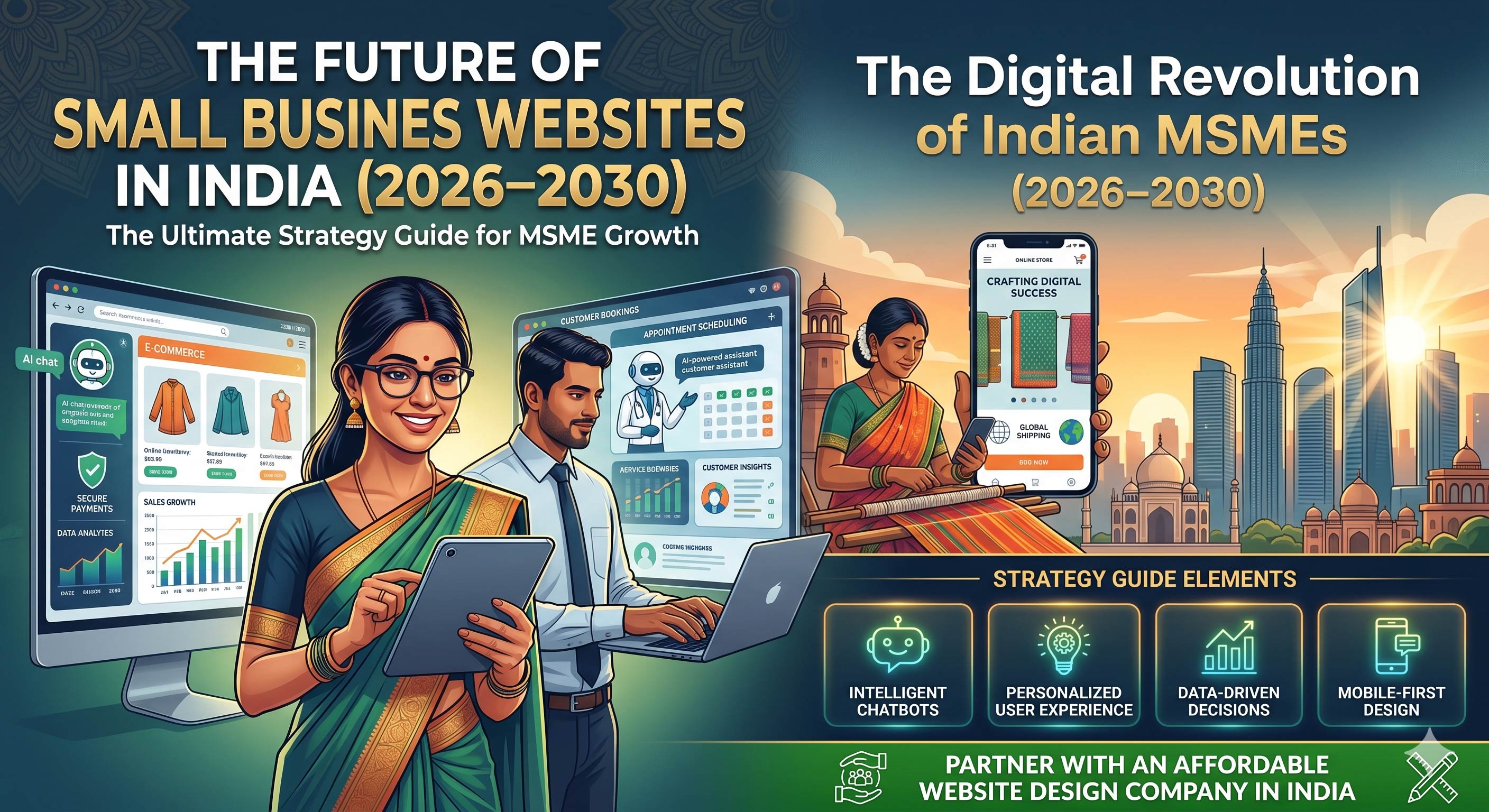
The Future of Small Business Websites in India (2026–2030): The Ultimate Strategy Guide

Discover how AI, WhatsApp commerce, voice search, and mobile-first design will shape the future of small business websites in India from 2026 to 2030.
The Digital Revolution of Indian MSMEs (2026–2030)
The business landscape in India is undergoing a massive technological paradigm shift. As we head towards the years 2026 to 2030, the traditional, static online brochure is officially obsolete. Small businesses across India—from local retail shops to rapidly scaling service providers—require highly functional, interactive, and intelligent web platforms to survive and thrive. To build a robust, future-proof online presence, partnering with an experienced affordable website design company in India is the essential first step toward true digital transformation.
1. AI-Driven Personalization and Dynamic UX
By 2026, artificial intelligence will no longer be an optional luxury for enterprise businesses; it will be a necessity for local enterprises. Next-generation websites will dynamically adapt their layouts, messaging, and product recommendations in real-time based on individual user behavior, geographical location, and language preferences. Implementing autonomous AI will allow startups and MSMEs to fully automate customer service, generate dynamic landing pages on the fly, and predict buying patterns without manual intervention, effectively leveling the playing field with global giants.
2. WhatsApp Commerce and Conversational Funnels
India is undeniably a mobile-first nation, and WhatsApp functions as its digital nervous system. The future of small business websites lies in seamless WhatsApp commerce integration. Instead of forcing users through complex, multi-step checkout processes that lead to cart abandonment, 2026-2030 websites will feature direct 'Click-to-WhatsApp' purchasing, automated order tracking, and instant customer support via official API integrations. This reduces transaction friction and drastically boosts conversion rates for local Indian businesses looking to simplify the buying journey.
3. Voice Search and Multilingual Local SEO
With the massive rise of affordable smartphones and high-speed internet in tier-2 and tier-3 cities, a significant portion of India's internet users prefer searching via voice in their native regional languages like Hindi, Tamil, Marathi, Telugu, or Bengali. Small business websites must optimize for natural, conversational long-tail queries. Instead of typing "best plumber Mumbai," users are asking their voice assistants, "mere paas achha plumber kaha milega?" Optimizing your site's metadata, schema markup, and content for voice-activated, multilingual search will be non-negotiable for local SEO dominance in the coming years.
4. Mobile-First Architecture as the Absolute Standard
Over 90% of active internet users in India access the web exclusively via smartphones. Adopting a strict, uncompromising mobile-first approach ensures your site loads instantly, responds immediately, and renders beautifully on smaller screens. Slow loading times and clunky navigation mean your current website is secretly killing sales and pushing potential customers directly to your competitors. Future websites must focus heavily on Core Web Vitals, visual stability, and lightweight frameworks to capture the extremely short attention spans of modern consumers.
5. Business Automation and UPI Integration
The future small business website will act as an autonomous, 24/7 employee. From automated booking systems and instant CRM synchronization to secure, seamless payment settlements via UPI (Unified Payments Interface), automation will handle repetitive operational tasks. This allows business owners to focus on scaling operations rather than managing manual inquiries, booking schedules, and billing processes. A fully automated website ensures that your business never sleeps.
Conclusion: Preparing Your Business for 2030
The next five years will reward Indian businesses that prioritize user experience, leverage the power of AI, and optimize for mobile-first, conversational commerce. Investing in a modern, scalable, and secure website today is the single best decision you can make for your brand's longevity and competitive edge in the digital marketplace.
Ready to Future-Proof Your Business?
Don't let your business get left behind in India's rapid digital race. At Jikut, we specialize in building high-performance, AI-ready, and mobile-optimized websites tailored specifically for Indian small businesses. Let us help you dominate your market and turn visitors into loyal customers.
Contact Us Today to Get Started:
Phone: +91 8888 589767
Email: sales@jikut.com
Written by
Vikas Giri
Founder & Content Creator
Frequently Asked Questions
+−Why is WhatsApp commerce important for Indian websites?
+−How will AI change small business websites by 2030?
+−Why should my business optimize for voice search in India?
+−What is a mobile-first website design strategy?
+−How can automation help my small business website?
Comments
Loading comments...
Leave a Comment
THERE'S MORE TO READ

Founder Calendar Fragmentation: Why Your 14 Half-Hour Meetings Leave Zero Deep Work (And the Time-Blocking Ritual That Reclaims It)
Fourteen scattered meetings leave founders just 42 minutes of real deep work. Here's the meeting-compression ritual that defrags your calendar and reclaims 500+ strategic hours a year.

Founder Decision Debt: Why Postponing 30 Small Calls a Week Quietly Compounds Into Startup Paralysis
Founder Decision Debt is the compounding cost of postponed micro-decisions that quietly stalls startups. Learn the Decision Ledger framework to clear the backlog and restore momentum.

Variant SKU Collision: Why Your "In Stock" Product Sells Air (And the Inventory Sync Lag Draining Your eCommerce Trust)
Variant SKU collision makes sold-out products show as "In Stock," triggering oversells and refund emails that gut customer trust. Here's how to detect and fix inventory sync lag.