The Psychology of Trust: How Modern Web Design Wins Customers

Discover how modern web design uses psychological cues, speed, and cognitive ease to build trust, reduce friction, and convert visitors into loyal customers.
The Split-Second Decision: Why Web Design is the Ultimate Trust Test
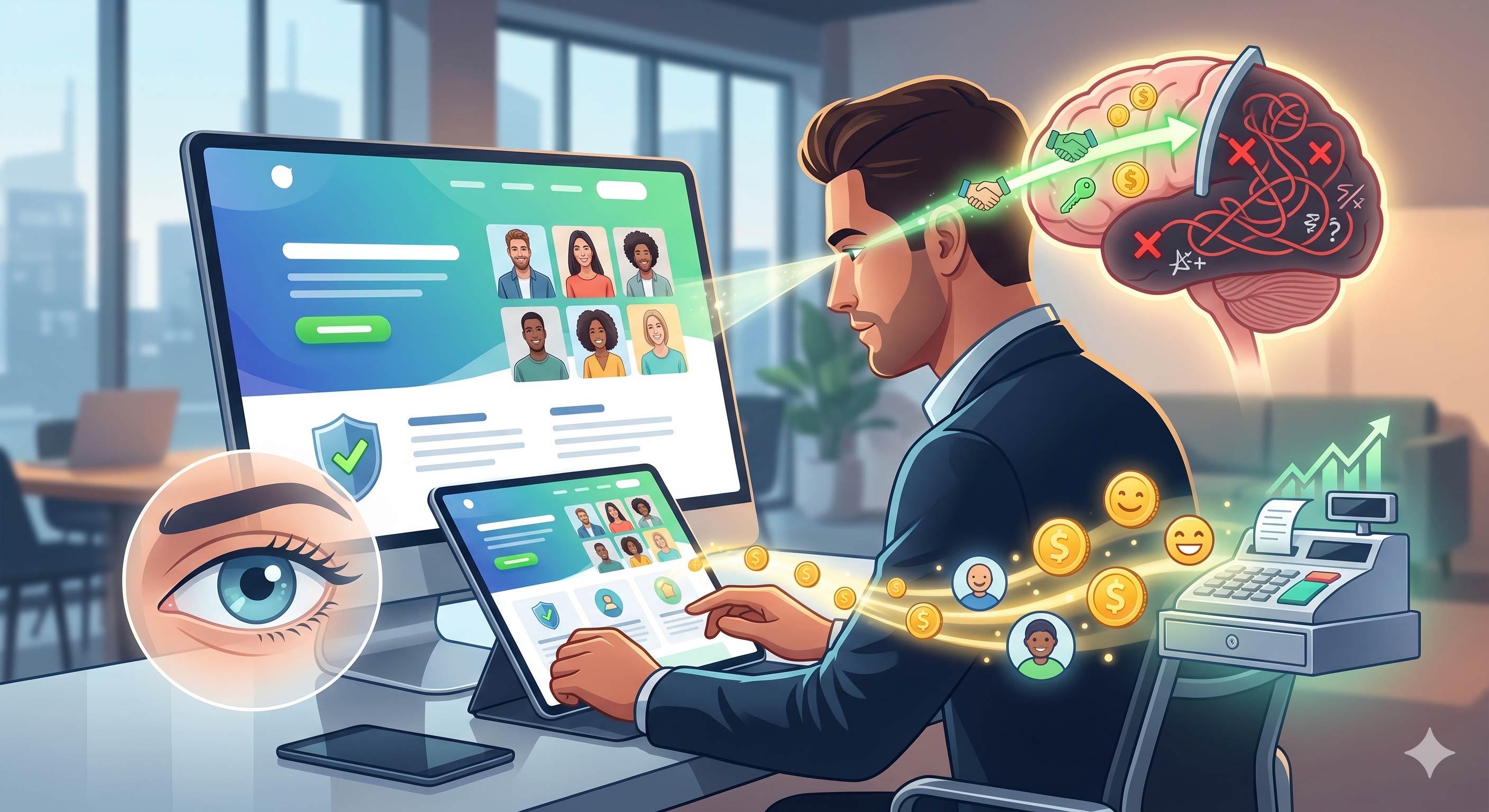
It takes less than 50 milliseconds (0.05 seconds) for users to form an opinion about your website. In that blink of an eye, their subconscious mind decides whether to stay or walk away. This split-second judgment isn't based on your product quality, your pricing, or your customer service—it is entirely based on your visual design. Understanding the psychology of trust is crucial for modern businesses trying to survive online. If you are noticing high bounce rates or low conversion rates, you might be suffering from some of the signs your business website is secretly killing sales.
1. The Aesthetic-Usability Effect: Beautiful Means Trustworthy
In human psychology, we suffer from a cognitive bias known as the "halo effect." When something looks beautiful, we automatically assume it is also functional, reliable, and honest. In web design, this manifests as the Aesthetic-Usability Effect. Users perceive more attractive websites as more usable, secure, and trustworthy than their clunky, outdated counterparts.
Color psychology also plays a massive role in trust. For example, blue is universally associated with security, trust, and stability (which is why most banks and tech giants use it), while green represents growth and health. To leverage this psychology, modern web design focuses on:
Generous White Space: Cluttered pages scream desperation. Clean layouts with plenty of breathing room convey confidence and luxury.
Consistent Typography: Limiting your site to two cohesive font families establishes visual order and professional authority.
High-Quality Imagery: Ditch generic stock photos. Authentic, high-resolution custom graphics or real team photos build a genuine human connection.
2. Performance as a Trust Signal: The Need for Speed
Trust is built on reliability, and online, reliability is measured in milliseconds. If a website takes more than three seconds to load, users immediately feel a sense of frustration and insecurity. A slow website signals poor technical maintenance and carelessness. Why would a customer trust you with their credit card information if you cannot keep your site running smoothly?
Optimizing your website speed is not just a technical SEO requirement; it is a fundamental pillar of user psychology. When pages load instantly, it creates a seamless, frictionless experience that keeps users feeling safe, in control, and eager to explore your offerings.
3. Cognitive Ease: Simplifying the User Journey
Our brains are inherently lazy; they prefer to process information with as little effort as possible. This is called cognitive ease. When a website is easy to navigate, clear in its messaging, and predictable in its layout, the user feels comfortable. This comfort translates directly into trust.
To achieve cognitive ease, web designers utilize standard design patterns. For instance, putting the logo in the top-left corner, the shopping cart in the top-right, and a clear navigation menu at the top. When you break these conventions, you introduce cognitive friction, which triggers suspicion. Implementing proven lead generation tips for websites can help you structure your conversion paths without overwhelming your visitors with unnecessary choices or confusing layouts.
4. Social Proof and Security: Validating the Decision
Humans are social creatures who look to others to validate their decisions, especially when financial risk is involved. To ease the anxiety of buying online, your website must display explicit trust signals:
Client Testimonials & Reviews: Place real customer reviews close to your call-to-action buttons to validate the purchase decision at the critical moment.
Trust Badges: Display SSL certificates, secure payment icons, and industry accreditations prominently.
Transparent Pricing: Hidden fees are the number one trust killer. Be upfront about costs to prevent cart abandonment.
Micro-interactions, such as a subtle button animation when hovered, also reassure the user that the website is active, responsive, and working correctly, further building subconscious trust.
Conclusion: Turn Trust Into Your Competitive Advantage
Building trust through web design is not about using manipulative tricks; it is about respecting your user's time, intellect, and security. By focusing on aesthetic credibility, fast performance, cognitive ease, and clear social proof, you transform your website from a simple digital brochure into a powerful customer-winning engine.
Ready to Build a High-Trust Website?
Don't let a poorly designed website turn potential customers away. At Jikut, we specialize in crafting beautiful, high-performance websites engineered to build trust and drive conversions. Let us help you elevate your digital presence today.
Contact Us Today:
Phone: +91 8888 589767
Email: sales@jikut.com
Written by
Vikas Giri
Founder & Content Creator
Frequently Asked Questions
+−Why is trust important in web design?
+−What is the aesthetic-usability effect?
+−How does slow loading speed affect user trust?
+−What are the best trust signals to include on a website?
+−How does color psychology influence trust in web design?
Comments
Loading comments...