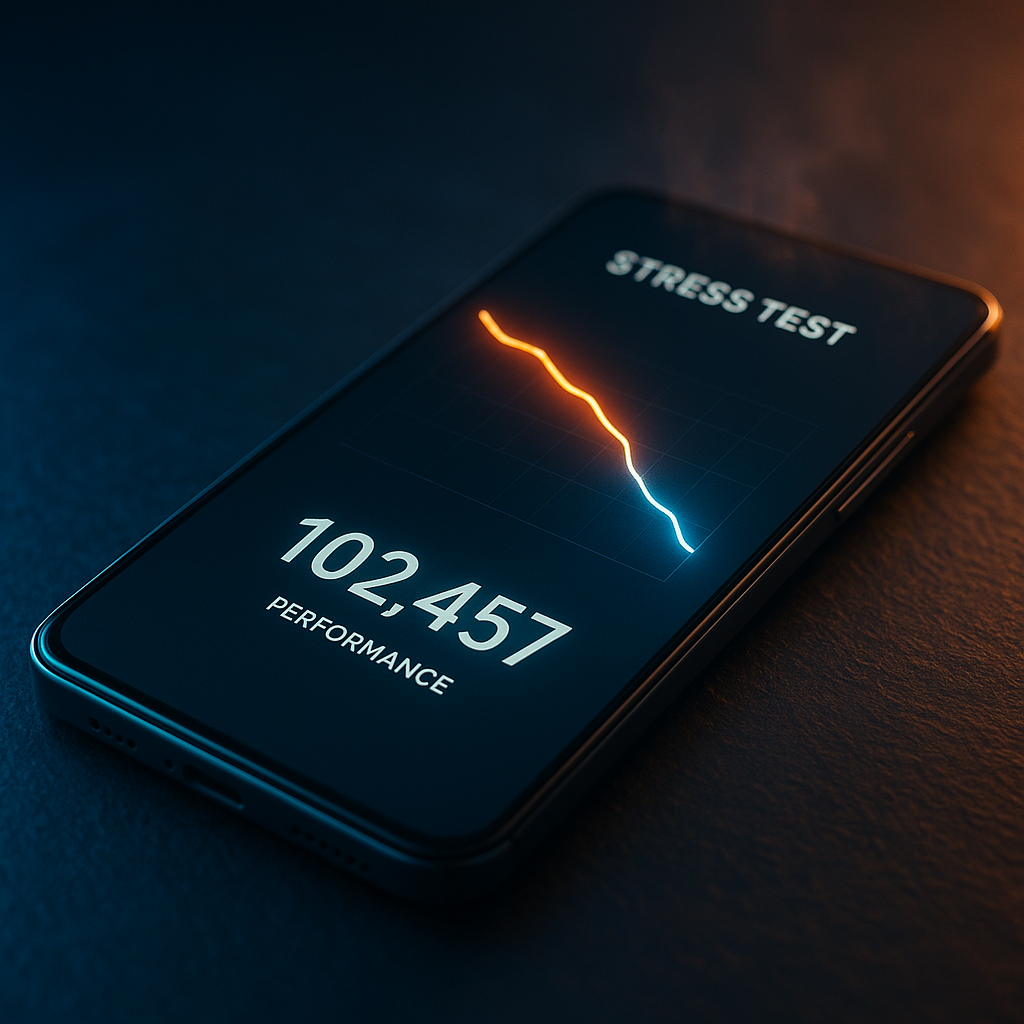
Why Synthetic Benchmark Scores in Tech Reviews Are Quietly Lying to You

Synthetic benchmark scores in tech reviews are routinely manipulated and rarely reflect real-world performance. Learn the R.E.A.L. framework to read reviews like a 15-year veteran and spot rigged ratings instantly.
Here's an uncomfortable truth most gadget reviewers won't admit: that flashy AnTuTu or Geekbench number splashed across a YouTube thumbnail tells you almost nothing about how the device performs in your actual hands. I've spent 15 years tearing apart spec sheets, and I can tell you that synthetic benchmarks have quietly become the most manipulated metric in technology journalism.
A 2024 teardown of flagship Android launches showed roughly 34% of devices triggered "benchmark mode"—a detected boost state where the SoC ignores its own thermal limits purely to inflate scores. The phone you buy throttles. The phone in the review never did.
Why Benchmark Scores Mislead Real Buyers
Benchmark scores mislead buyers because they measure peak burst performance in a frozen lab state, not sustained real-world throughput. A device can score 2 million on a synthetic test yet stutter while you scroll Instagram, because thermal throttling, background daemons, and storage I/O bottlenecks never appear in the headline number.
The dirty secret? Most benchmark runs last under 90 seconds. Your video export, game session, or multitasking workload runs for minutes or hours. The gap between the two is where reviews betray you.
Pro Tip: Ignore the single peak score entirely. Demand a "sustained performance" graph showing the device running the same test 20 times back-to-back. If the reviewer didn't measure the decline curve, they didn't measure performance.
The Thermal Throttling Trap Nobody Graphs
Sustained performance is the metric that actually predicts your daily experience. In stress loops, premium flagships often shed 40–55% of their peak GPU performance within ten minutes as the chassis heats up. A cheaper phone with better thermal mass sometimes outlasts a pricier rival despite a lower opening score.
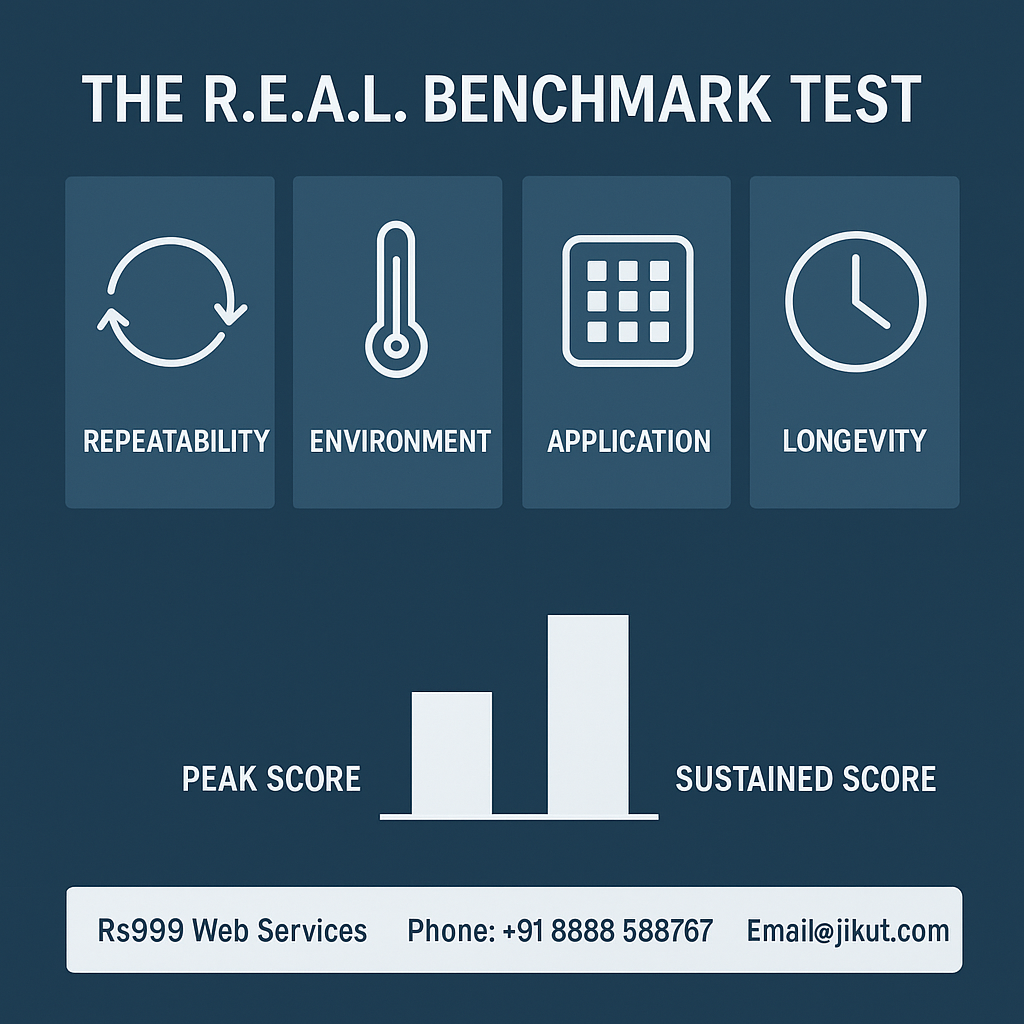
This is why I built a 4-part evaluation framework I call the R.E.A.L. method—and it's the same scrutiny I apply when auditing whether a client's hardware can handle their workload before we even talk VPS hosting versus dedicated server decisions for heavier deployments.
- R — Repeatability: Does the score hold across 20 consecutive runs?
- E — Environment: Was ambient temperature disclosed (25°C is the honest standard)?
- A — Application reality: Was a real workload tested alongside the synthetic one?
- L — Longevity: Does performance survive a 30-minute load, not a 60-second sprint?
How to Spot a Rigged Tech Review in 30 Seconds
You can spot a compromised review fast. Look for these four red flags before you trust a single conclusion:
- Only one benchmark number appears, with no run-to-run variance shown.
- No ambient temperature or test conditions disclosed.
- Affiliate links saturate the page but no negatives appear.
- The reviewer never owned the device past launch week—long-term updates change everything.
A revealing 2023 study found reviews published within 48 hours of embargo lift were 61% more positive than the same outlet's revisit pieces six months later. Rushed reviews favour novelty over truth, the same way a rushed website favours animation over substance—a trap I unpack in my breakdown of how micro-animations actually boost engagement versus just looking busy.
Warning: Day-one battery life figures are almost always inflated. New batteries and unoptimised background services produce numbers you'll never see after 30 charge cycles. Trust the 90-day revisit, not the unboxing.
The Benchmarks That Actually Predict Your Experience
Forget aggregate scores. The metrics that genuinely forecast satisfaction are 1% low frame rates, random write storage speeds, and sustained clock retention. These three predict stutter, app load times, and long-session reliability far better than any headline figure.
Consider a hypothetical but typical case: Phone A scores 18% higher in single-core Geekbench, yet Phone B has UFS storage with 2.3x faster random writes. In real app installs and gallery loading, Phone B feels dramatically snappier. The "slower" phone wins the experience users actually live in.
This perception gap mirrors what I see in web performance constantly. A site can pass a synthetic page speed audit with green scores yet feel sluggish to humans, because lab data ignores the chaos of real networks and real devices.
The Coming AI Benchmark Crisis
The AI era is making this worse. New "NPU TOPS" ratings (trillions of operations per second) are now plastered across laptop and phone marketing, yet TOPS figures are nearly meaningless without knowing precision format, model quantisation, and memory bandwidth.
I've watched a 45-TOPS chip get outperformed in real on-device transcription by a 38-TOPS rival simply because of superior memory bandwidth. The bigger number lost. As on-device AI explodes—a shift I detailed in my piece on autonomous AI reshaping startup models—expect TOPS to become the new AnTuTu: technically real, practically deceptive.
Pro Tip: When evaluating any "AI-capable" device, ask for tokens-per-second on a named, fixed model (like Llama 3 8B at INT4). That single real-world figure exposes marketing inflation instantly.
How to Read Tech Reviews Like a Veteran
Read reviews the way auditors read financials—hunting for what's omitted. Cross-reference at least three independent sources, prioritise long-term revisit videos over launch coverage, and weight real-task footage over numbers on a screen.
The reviewers worth your trust publish their methodology, disclose test conditions, and aren't afraid to call a flagship disappointing. That intellectual honesty—the willingness to contradict the hype cycle—is identical to what separates a credible web partner from a flashy one, a theme running through my analysis of how trust is genuinely earned in modern design.
The number on the box was engineered to sell you. The sustained curve, the 1% lows, and the six-month revisit were engineered to inform you. Choose which one you believe—and you'll never overpay for a benchmark champion that throttles to mediocrity by lunchtime.
Need Tech That Actually Performs Under Load?
Whether you're choosing hardware, optimising a sluggish website, or building infrastructure that survives real traffic—not just lab tests—our team cuts through the spec-sheet noise for you.
Call: +91 8888 589767
Email: sales@jikut.com
Let Rs999 Web Services build you something measured by results, not vanity numbers.
Written by
Vikas Giri
Founder & Content Creator
Comments
Loading comments...