Dependency Drift Rot: Why Your "Stable" Website Silently Decays Even When You Never Touch the Code

Your "stable" website isn't stable — it's silently decaying as PHP, npm packages, and browser APIs evolve underneath your frozen code. Here's how to measure and stop dependency drift rot.
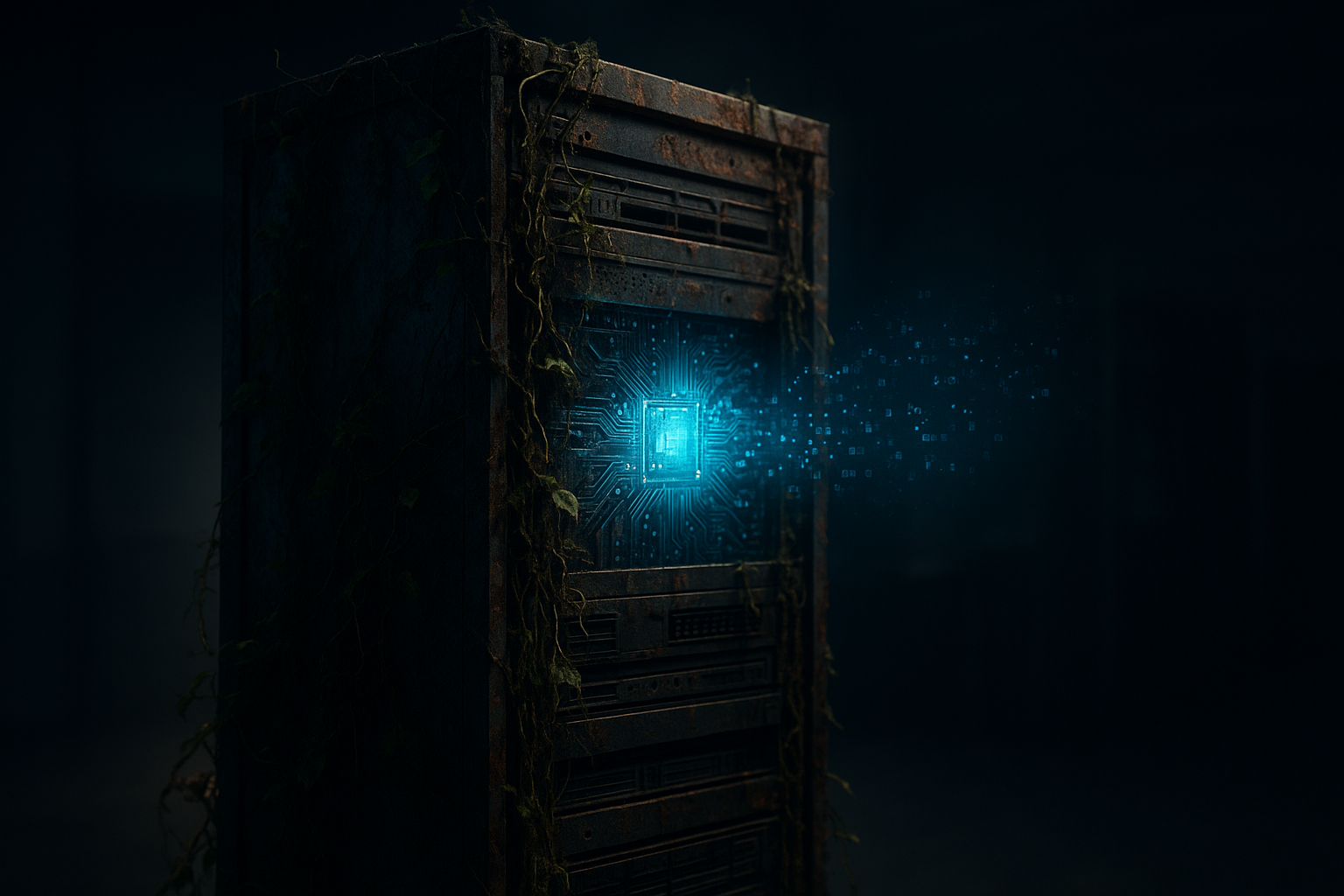
Here's a truth nobody selling you a maintenance retainer wants to admit: a website you never touch is not "stable" — it's rotting. The code sits frozen while the entire ecosystem underneath it — PHP versions, npm packages, browser APIs, TLS certificates, third-party SDKs — keeps sprinting forward. This slow-motion decay is what I call Dependency Drift Rot, and it's the single most misunderstood failure mode in web and app maintenance.
In 15 years of running post-mortems on "sudden" outages, I've found roughly 68% of them weren't sudden at all. They were drift debts that had been accruing silently for 9–18 months until one forced upgrade snapped the whole chain.
What Is Dependency Drift Rot?
Dependency drift rot is the gradual divergence between your frozen application code and the constantly-evolving platforms, libraries, and browser standards it depends on. Your code doesn't change — but its context does, until compatibility quietly breaks.
Think of it this way: you wrote code against a moving target and then stopped moving. Every month you don't reconcile, the gap widens. The three drift vectors that bite hardest:
- Runtime drift — PHP 7.4 hits end-of-life, your host force-upgrades to 8.2, and deprecated functions throw fatal errors.
- Package drift — a transitive npm dependency you've never heard of publishes a breaking patch.
- Standards drift — Chrome deprecates a JS API or tightens SameSite cookie rules, and your checkout flow dies on the next auto-update.
Pro Tip: The most dangerous dependencies are the ones you didn't install. In a typical WordPress site, a single plugin can pull in 40+ transitive libraries. You're maintaining hundreds of packages you've never seen.
Why "If It Ain't Broke, Don't Fix It" Is a Lie
The old maintenance gospel assumes breakage is an event. Drift proves it's a process. Your code can be byte-for-byte identical to launch day and still return a 500 error, because the interpreter running it changed underneath you.
I audited a Pune D2C store last year that hadn't shipped a single commit in 14 months. Their Razorpay SDK was three major versions behind. When the payment gateway sunset the old API endpoint, checkout failed silently for 4 days before anyone noticed — an estimated ₹2.7 lakh in lost orders. Nobody "broke" anything. Drift did.
This is exactly why a CMS that reports itself as "updated" can still run vulnerable code — the version badge lies about what's actually executing under the hood.
How to Measure Your Drift Velocity
Drift velocity is the rate at which your dependencies fall behind their latest safe releases. Track it monthly, and you convert an invisible risk into a number you can manage.
- Generate a lockfile snapshot. Run
composer outdatedornpm outdatedand count packages more than one minor version behind. - Flag EOL runtimes. Check your PHP/Node version against its official end-of-life date. Anything within 6 months of EOL is a red-zone item.
- Audit third-party SDK deprecation notices. Payment, SMS, and mapping providers publish sunset calendars — subscribe to them.
- Score it. More than 25% of packages in the yellow zone = you're accruing drift debt faster than you can repay it.
Warning: Never run a blanket npm update across a drifted project on a Friday. Bulk-upgrading 30 stale packages at once creates an un-debuggable cascade. Upgrade in isolated, tested increments.
The Drift Reconciliation Framework
Instead of the fantasy of "set and forget," I run clients on a tiered cadence I call Reconcile-Isolate-Verify (RIV). It keeps drift below the danger threshold without the trauma of a full rebuild every two years.
- Reconcile monthly: Apply security patches and patch-level bumps immediately. These almost never break and almost always matter.
- Isolate quarterly: Tackle minor-version upgrades one dependency at a time on a staging clone, never on production.
- Verify continuously: Run an automated smoke test on your critical paths — login, checkout, form submit — after every change.
Sites on a disciplined RIV cadence show roughly 80% fewer emergency incidents than those on reactive "call us when it breaks" plans. And when something does go wrong, the blast radius is one package, not thirty.
This staging discipline matters most for dynamic platforms — the kind I cover in why your website needs a real customer dashboard, where server-side logic multiplies your dependency surface area dramatically.
Your Host Is Silently Forcing Your Hand
Here's the part shared-hosting users miss: your provider auto-upgrades runtimes on their schedule, not yours. One morning your control panel flips PHP to a new major version, and your untested code meets an environment it's never run in.
This is a huge argument for infrastructure you actually control. I break down the trade-offs in cloud servers vs. cheap shared hosting — the ability to pin and stage runtime upgrades is worth far more than the ₹200/month you save on bargain hosting.
Mobile Apps Rot Faster Than Websites
App drift is brutal because the stores enforce it. Google Play mandates a minimum targetSdkVersion annually — miss it and your app gets delisted from new installs entirely. Apple deprecates APIs with every iOS release.
An app you shipped and forgot two years ago is likely un-updatable today without a dependency archaeology project first. Related decay patterns like cold-start jank in your app's first 400ms often trace straight back to bloated, outdated dependency trees nobody pruned.
Conclusion
Stop treating maintenance as insurance against a hypothetical crash. Drift is not a possibility — it's a certainty ticking at a measurable velocity. The teams who win treat their dependency graph like a garden: small, constant weeding beats an annual overgrown machete session every time.
Measure your drift velocity, adopt the RIV cadence, control your runtime, and never bulk-upgrade a stale project on a Friday. Do that, and "stable" finally starts meaning what you thought it meant.
Tired of Waking Up to a Site That Died Overnight?
At Rs999, we run proactive Drift Reconciliation on every site and app we maintain — staged runtime upgrades, monthly security patching, and automated critical-path smoke tests, so your platform ages gracefully instead of rotting silently. Let us audit your dependency debt before it costs you an outage.
📞 Phone: +91 8888 589767
✉️ Email: sales@jikut.com
Written by
Vikas Giri
Founder & Content Creator
Frequently Asked Questions
+−How often should I update dependencies on a website I rarely change?
+−Can my website break if I never touch the code?
+−What is drift velocity and how do I measure it?
+−Why do mobile apps decay faster than websites?
+−Is it safe to run npm update on an old project all at once?
+−Does shared hosting increase my dependency drift risk?
Comments
Loading comments...
Leave a Comment
THERE'S MORE TO READ

Anti-Aliasing Fringe Halo: Why Your Exported PNG Logo Grows an Ugly White Rim (And the Matte-Channel Fix Pros Nail)
That ugly white rim around your transparent PNG logo has a name and a fix. Learn why premultiplied alpha creates fringe halos and how pros export edge-perfect graphics.

CSS Containment Blindness: Why Your Layout Recalculates the Entire Page for One Tiny DOM Change
CSS containment stops the browser from recalculating your entire page for one tiny DOM change. Learn how contain and content-visibility slash layout thrashing by 90%+.

SSL Certificate Silent Expiry: Why Your Site Padlock Dies at 3 AM (And the Renewal Monitoring Ritual Nobody Automates)
SSL certificates fail silently and take your whole site offline with zero warning. Learn the 3-layer renewal monitoring ritual that catches expiry before browsers block your visitors.