The Convergence of UX and SEO: How Core Web Vitals are Shaping Web Development in 2026

Discover how Core Web Vitals and user experience (UX) trends are redefining SEO rankings in 2026, and learn practical web design tips to boost search visibility.
The Convergence of UX and SEO: How Core Web Vitals are Shaping Web Development in 2026
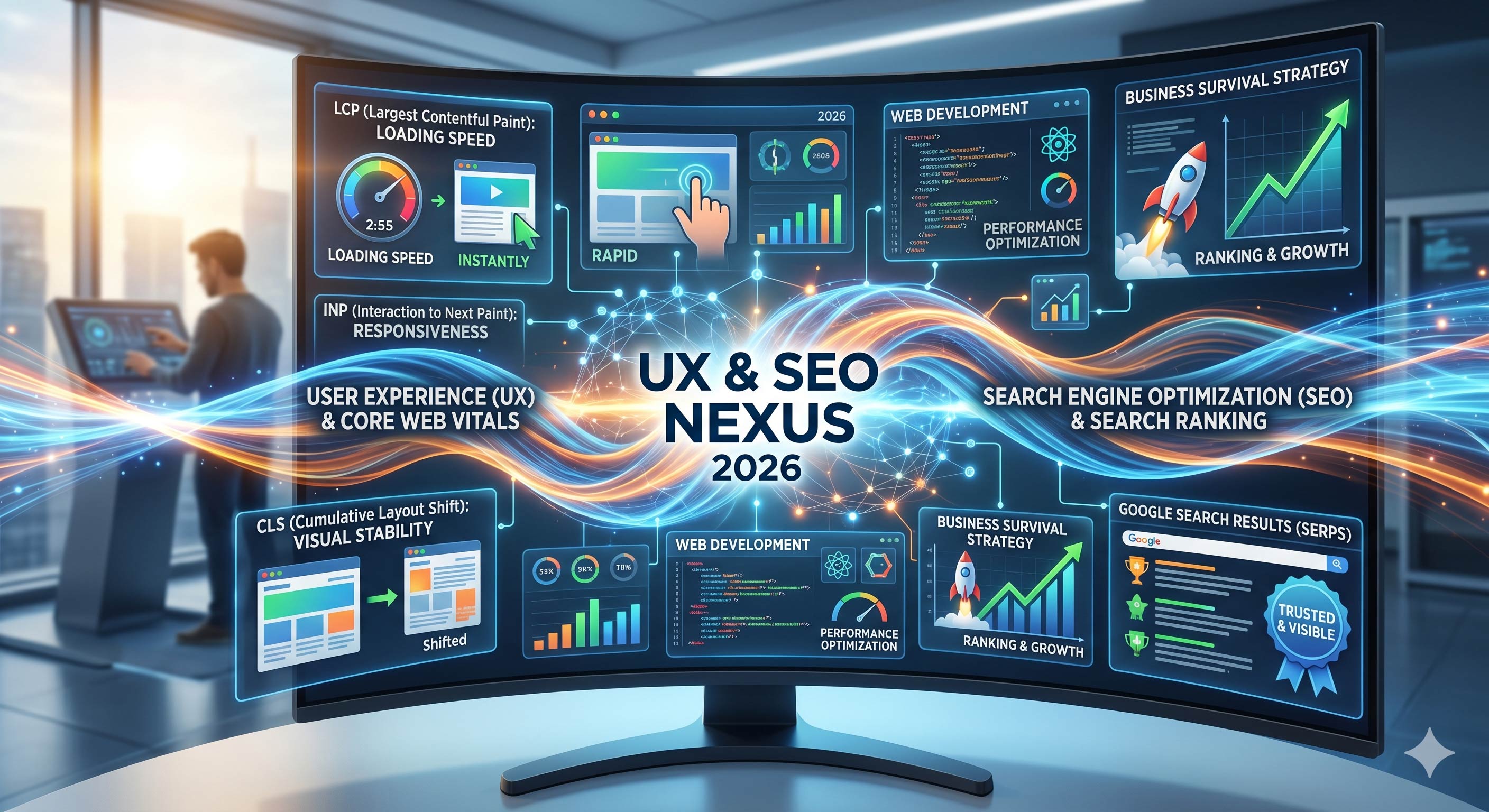
Search engine optimization has undergone a massive transformation. Gone are the days when ranking on the first page of Google was simply a matter of keyword stuffing and backlink building. Today, Google's algorithms are smarter, prioritizing how actual humans experience your website. The ultimate bridge between search engine visibility and human satisfaction is User Experience (UX), strictly quantified by Google's Core Web Vitals.
As we navigate through 2026, the connection between design performance and SEO ranking is stronger than ever. For businesses aiming to stay competitive, understanding how to optimize these metrics is no longer optional—it is a core business survival strategy. Let us explore how modern UX trends and web performance standards are redefining the rules of the web.
Understanding the New Era of Core Web Vitals
Google’s Core Web Vitals measure the speed, responsiveness, and visual stability of a website. While Largest Contentful Paint (LCP) and Cumulative Layout Shift (CLS) remain vital, the introduction of Interaction to Next Paint (INP) as a primary metric has forced developers to focus heavily on real-time responsiveness. If a user clicks a button and experiences even a microsecond of lag, your search engine rankings could suffer.
This is why investing in professional website speed optimization has become the ultimate SEO superpower. Slow websites increase bounce rates, signaling to search engines that your site does not offer a high-quality user experience. Optimizing your code, leveraging advanced caching, and minimizing heavy scripts are essential steps to keep your metrics in the green.
The Psychology of First Impressions
When a visitor lands on your page, their subconscious mind immediately evaluates your credibility. Web design is the first touchpoint of trust. If your layout is cluttered or takes too long to render, users will hit the back button immediately. This behavior increases your bounce rate and hurts your SEO standings.
Understanding what customers notice first when they visit your website is critical. A clean layout, an intuitive navigation menu, and a clear above-the-fold value proposition determine whether a visitor stays or leaves. By designing with high visual hierarchy and fast-loading elements, you naturally encourage users to stay longer, send positive signals to search engines, and convert visitors into loyal clients.
How Micro-Interactions Influence SEO Metrics
Engaging a user goes beyond static text and images. Modern web design utilizes subtle interactive features to guide users down the sales funnel. However, these features must be lightweight and purposeful to avoid slowing down the user's browser.
Integrating optimized micro-animations to boost engagement can capture attention and reduce page abandonment without hurting your performance metrics. When done correctly, these animations improve the overall narrative flow of your website, making the browsing experience satisfying and interactive. This increased dwell time acts as a powerful SEO ranking signal, proving to Google that users value your content.
Practical Steps to Align UX and SEO in 2026
To ensure your web design supports your SEO efforts, implement these best practices:
- Prioritize Mobile-First Design: Ensure your website functions flawlessly on all screens. Visual stability (CLS) must be tested across mobile devices specifically.
- Optimize Media Assets: Convert images to modern formats like WebP or AVIF, and defer offscreen images using lazy loading.
- Eliminate Render-Blocking Resources: Minify CSS and JavaScript, and load critical scripts inline to ensure the page renders immediately.
- Optimize Interactive Fields: Ensure contact forms, search bars, and interactive buttons respond instantly to user clicks to secure a perfect INP score.
Conclusion: Design for Humans, Optimize for Search
The line between a web developer, a web designer, and an SEO specialist has completely blurred. A beautiful website that does not rank is useless, and a highly-ranked website that looks outdated will fail to convert. By aligning your design aesthetics with modern Core Web Vitals, you create a robust digital engine that ranks effortlessly and converts continuously.
Supercharge Your Digital Presence Today
Is your website ready to dominate the search engines in 2026? At Jikut, we specialize in building fast, beautiful, and SEO-optimized websites designed to grow your business. Let our experts optimize your site for Core Web Vitals and turn traffic into revenue.
Get in touch with us:
- Phone: +91 8888 589767
- Email: sales@jikut.com
Written by
Vikas Giri
Founder & Content Creator
Related Tags
Frequently Asked Questions
+−What are Core Web Vitals and why do they matter for SEO?
+−How does Interaction to Next Paint (INP) affect my website?
+−Can micro-animations slow down my website and hurt SEO?
+−How can I improve my website's visual stability (CLS)?
+−How often should I audit my website's Core Web Vitals?
+−Does hosting affect Core Web Vitals?
Comments
Loading comments...
Leave a Comment
THERE'S MORE TO READ
How Much Does Instagram Reels Editing Cost in India? (2026 Per-Video Pricing & ROI Breakdown)
A transparent 2026 breakdown of Instagram Reels editing costs in India—from ₹800 raw cuts to ₹8,000 concept-to-post packages—plus the ROI metrics that actually matter.

Zero-Click Cannibalization: Why Your Best SEO Content Is Answering Questions That Never Send You Traffic
Your best SEO content might be ranking beautifully while sending zero traffic—here's how zero-click cannibalization works and the tiered-answer framework that fights back.

Story Poll Fatigue: Why Your "Engagement Bait" Stickers Are Quietly Training the Algorithm to Bury You
Reflexive poll stickers quietly train Instagram's algorithm to bury your Stories. Learn the Friction-Value Framework to rebuild reach without engagement bait.