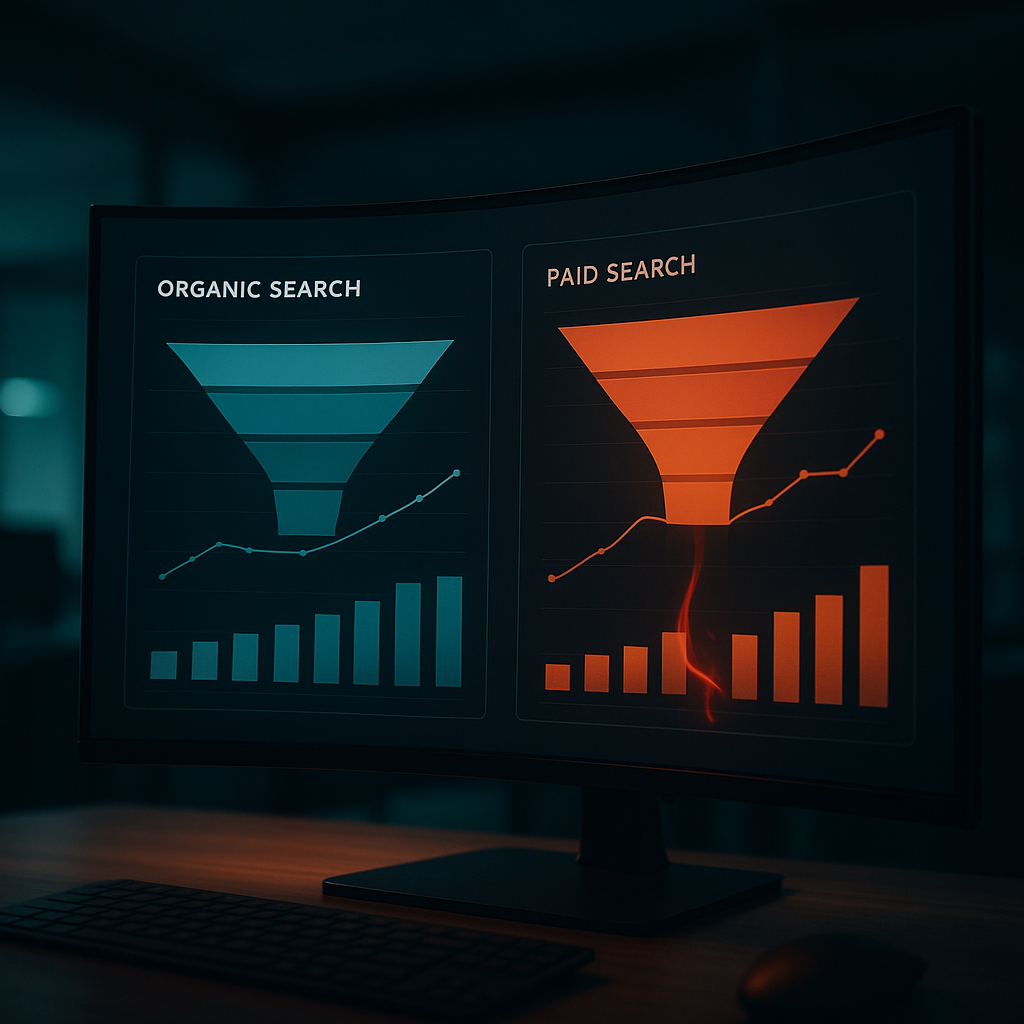
Branded Search Cannibalization: Why Your Own Retargeting Ads Are Stealing Credit From Organic (And the Suppression Audit That Stops It)

Your branded retargeting ads are quietly stealing conversion credit from organic search. Here's the suppression audit framework that exposes the leak and recovers 18-23% of wasted spend.
Here's a number that should make your CFO twitch: roughly 18-23% of paid search spend at mid-market brands gets burned bidding on queries that would have converted organically anyway. You're paying a toll to walk through a door you already own.
This is branded search cannibalization, and it's the quietest budget leak in the entire performance marketing stack. Nobody audits it because the dashboards reward it. Your retargeting and brand campaigns happily claim conversions that organic, email, and direct already earned.
What Is Branded Search Cannibalization?
Branded search cannibalization happens when paid ads capture conversions that organic search would have delivered for free. The user already intended to buy from you. The ad just intercepts the click and bills you for traffic you'd have gotten anyway.
The tell is brutal once you look for it. A user types your exact brand name, sees a paid ad sitting above your own #1 organic result, clicks the ad, and converts. Your cost-per-acquisition spreadsheet celebrates. Reality just charged you ₹40 to ₹120 per click for a sale that was already in the bag.
Pro Tip: Pull your branded campaign's "search terms" report and isolate exact-match brand queries. If those terms carry a sub-₹150 CPA and 8x+ ROAS, that's not efficiency. That's a smoking gun for incrementality you never actually created.
Why Your Dashboards Reward the Theft
Attribution models default to last-click greed. The final touchpoint hoards 100% of the credit, so a retargeting ad that nudged a returning customer looks heroic on paper.
Meanwhile your organic team, who built the brand demand that triggered the search in the first place, gets nothing. This is the same attribution rot I unpacked in the dark funnel piece — credit flows to whoever shows up last, not whoever did the work.
A 2024 holdout study across Indian D2C brands found that pausing branded paid search dropped total branded conversions by only 4-7%, not the 30-40% the paid dashboards predicted. Translation: most of that "paid" revenue was organic wearing a costume.
The Suppression Audit: A 4-Step Framework
The Suppression Audit isolates true incremental lift by systematically muting channels and measuring what actually disappears. Run it over a clean 21-day window with stable seasonality.
- Geo-split holdout. Pause branded paid search in 3-4 matched cities. Keep it live everywhere else. Compare total branded conversions per capita.
- SERP overlap mapping. Audit every branded query where you rank #1 organically AND run an ad. That overlap is your cannibalization candidate pool.
- Incrementality math. Subtract organic baseline from total. The gap is your true paid contribution — usually far smaller than reported.
- Dayparting suppression. Turn off brand ads during hours your organic CTR peaks. Watch if revenue even flinches.
Warning: Never kill branded paid search blind across all geos at once. Competitors poaching your brand terms is a real threat. The audit isolates self-cannibalization, not competitive conquesting — those need opposite responses.
When Branded Paid Search Actually Earns Its Keep
Branded paid search is defensible in exactly three scenarios: when rivals bid on your name, when your organic listing sits below the fold on mobile, or when you need to control the messaging in a crisis.
If a competitor runs ads on "your brand name reviews," surrendering that real estate hands them warm intent. That's not cannibalization — that's a moat. The mistake is treating *every* branded click as a defense when 80% face zero competitive threat.
Your brand SERP stability matters here enormously. A volatile, untrustworthy branded result page makes paid defense feel necessary — I broke down that dynamic in the brand SERP volatility breakdown. Fix the organic foundation and the paid crutch becomes optional.
Where to Redeploy the Recovered Budget
Once you reclaim that 18-23%, don't just bank it — redirect it to genuine demand generation. Top-of-funnel discovery, where you're actually creating new intent rather than harvesting existing intent, returns far more incremental revenue.
- Non-branded category terms — bid where customers don't yet know you.
- Answer Engine Optimization — get cited by AI chatbots before the click even happens. My AEO playbook shows the structured-data plumbing for this.
- Site speed — a faster page lifts every channel's conversion rate simultaneously. The speed optimization guide covers the technical wins.
A Pune-based fashion label I consulted with cut branded paid spend by ₹2.1 lakh monthly after their audit. Total branded conversions dipped just 5%. They rerouted that budget to category-level search and grew net-new customers 31% in one quarter.
How to Measure It Without a Data Science Team
You don't need a PhD. You need causal discipline. Set up a recurring geo-holdout in Google Ads experiments, compare branded organic clicks in Search Console before and during the test, and trust the holdout number over the platform's self-reported conversions every single time.
The platform is the dealer telling you to keep gambling. The holdout is the only honest witness in the room. A trustworthy, fast-loading destination amplifies these gains — which is why the science behind high-converting websites compounds with everything you do upstream.
Stop letting last-click steal the trophy. The brand demand was built by your content, your reputation, your reviews — not by an ad that jumped the queue at the finish line.
Reclaim Your Wasted Ad Spend
Ready to stop paying for clicks you already own? At Jikut, we build fast, conversion-engineered websites and run the suppression audits that separate real incremental revenue from attribution theater — so every rupee works.
📞 Phone: +91 8888 589767
✉️ Email: sales@jikut.com
Written by
Vikas Giri
Founder & Content Creator
Frequently Asked Questions
+−How do I know if my branded paid search is cannibalizing organic instead of incremental?
+−Should I just turn off all branded paid search to save money?
+−Why does my dashboard show branded campaigns with amazing ROAS if they're wasteful?
+−What window should I use to run a branded search suppression audit?
+−Where should I redeploy budget recovered from branded search cannibalization?
Comments
Loading comments...
Leave a Comment
THERE'S MORE TO READ
How Much Does Instagram Reels Editing Cost in India? (2026 Per-Video Pricing & ROI Breakdown)
A transparent 2026 breakdown of Instagram Reels editing costs in India—from ₹800 raw cuts to ₹8,000 concept-to-post packages—plus the ROI metrics that actually matter.

Zero-Click Cannibalization: Why Your Best SEO Content Is Answering Questions That Never Send You Traffic
Your best SEO content might be ranking beautifully while sending zero traffic—here's how zero-click cannibalization works and the tiered-answer framework that fights back.

Story Poll Fatigue: Why Your "Engagement Bait" Stickers Are Quietly Training the Algorithm to Bury You
Reflexive poll stickers quietly train Instagram's algorithm to bury your Stories. Learn the Friction-Value Framework to rebuild reach without engagement bait.