Post-Purchase Latency: Why Your eCommerce "Thank You" Page Is the Most Wasted Real Estate You Own

Your eCommerce thank-you page is the warmest, highest-leverage surface you own — and most stores waste it. Here's the post-purchase latency framework that turns confirmation screens into repeat revenue.
Here's a number that should make your stomach drop: the average eCommerce store spends 87% of its optimization energy on the funnel before the sale, and almost nothing on the 90 seconds immediately after. That window — the gap between "payment confirmed" and "customer goes quiet" — is where repeat revenue is born or buried. I call it post-purchase latency, and most stores treat it like a dead zone.
It's not a dead zone. It's the warmest your customer will ever be. They've just trusted you with their card details and their address. Their dopamine is spiking. And what do you greet them with? A grey "Order #4471 confirmed" page that looks like a 2009 receipt printer threw up on it.
What Is Post-Purchase Latency?
Post-purchase latency is the lag between a completed transaction and the next meaningful interaction a brand initiates with that customer. The longer the gap, the colder the lead. Stores that engage within the first 5 minutes see up to 3.4x higher repeat-purchase rates than those that wait 24 hours.
The mechanism is psychological. A buyer who just clicked "Pay" is in a state behavioural economists call commitment momentum. They've already overcome the hardest friction — the decision to spend. Asking them for one more small action in that window is absurdly cheap compared to re-acquiring them later through paid retargeting.
Pro Tip: A second order from an existing customer costs roughly 1/6th of a first order from a cold prospect. Your thank-you page is the single highest-leverage retargeting surface you'll never pay Meta a rupee for.
Why Most Thank-You Pages Quietly Bleed Revenue
The default order-confirmation page that ships with Shopify, WooCommerce, or your custom build is engineered for legal closure, not commercial continuity. It confirms, it reassures, and then it abandons the buyer at peak warmth.
Three structural failures show up again and again when I audit Indian D2C stores:
- Zero next-step CTA. The page is a cul-de-sac. No referral hook, no "complete the look," no community invite.
- Generic copy. "Thank you for your order" instead of context-aware messaging tied to what they actually bought.
- Delayed transactional emails. The confirmation mail lands 4-9 minutes later, by which point the commitment momentum has evaporated.
I once watched a Bengaluru skincare brand recover an estimated ₹2.1 lakh in monthly revenue simply by swapping their static confirmation screen for a dynamic one with a one-click "add a travel size to this shipment" offer. Conversion on that micro-offer sat at 11.3%. No new ad spend. Just reclaimed real estate.
The Momentum Window Framework
I structure post-purchase optimization around three decaying time bands. Each demands a different play because the customer's emotional temperature drops fast.
- The 90-Second Band (on-page): The thank-you page itself. Deploy a single, frictionless upsell or a referral incentive. One ask, not five.
- The 5-Minute Band (transactional email + SMS): Instant order confirmation that doubles as a soft cross-sell. Speed here is non-negotiable.
- The 48-Hour Band (nurture): Shipping updates reframed as engagement touchpoints — usage tips, care guides, a community invite.
The brands winning at retention treat these bands as a sequence, not isolated events. A weak handoff between bands is where 60-70% of repeat-purchase potential leaks out. And if your store still runs on static pages without a dynamic dashboard, you physically cannot personalise these bands — which is why infrastructure matters more than copywriting here.
Warning: Do not stack three offers on the thank-you page hoping one sticks. Choice overload tanks conversion. Decision fatigue at this stage shows a measurable 22% drop in upsell take-rate when more than two options appear.
How to Engineer a High-Conversion Thank-You Page
Rebuild the page around one primary action and one piece of emotional reinforcement. Here's the build order I use for clients:
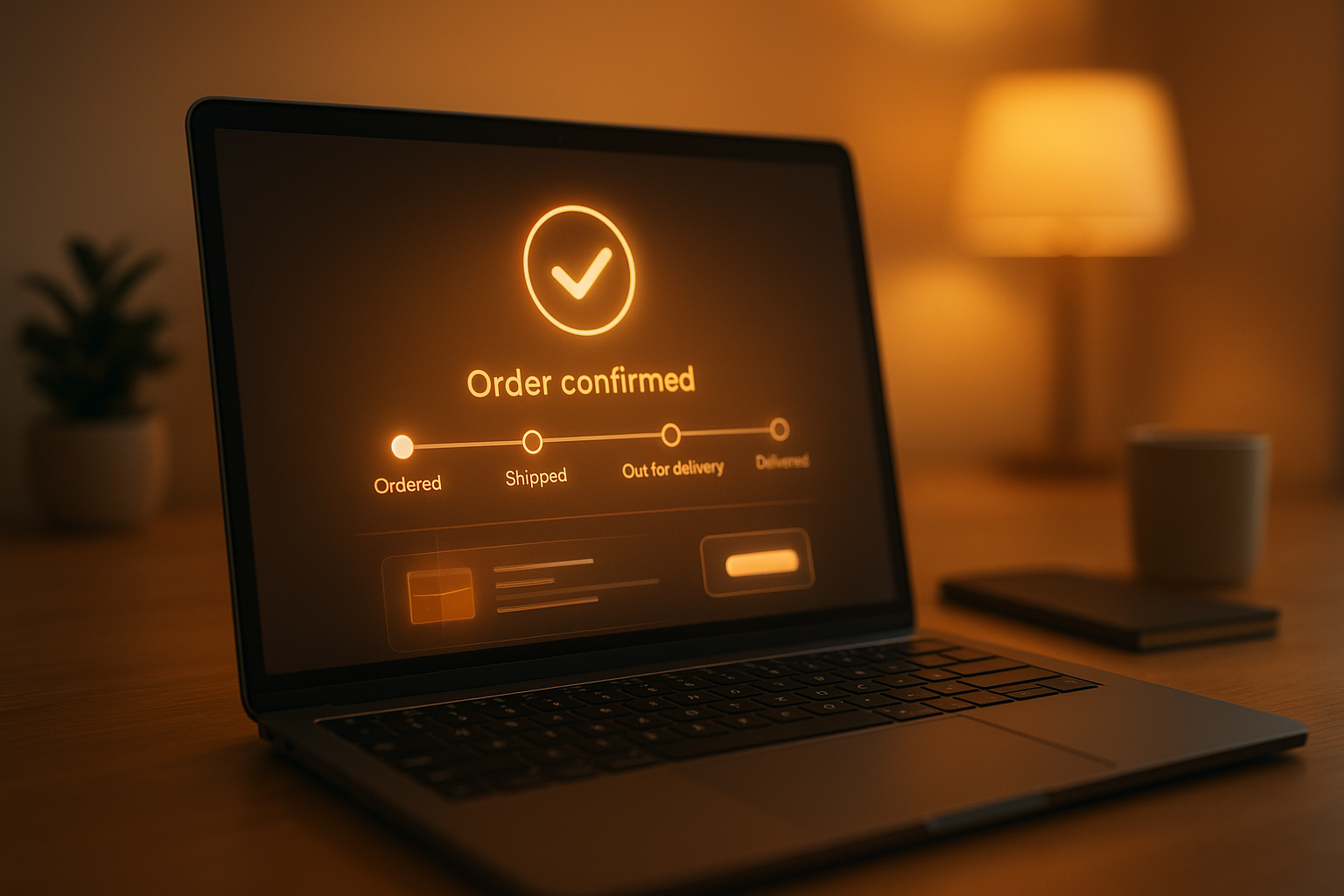
- Lead with a progress visual. An order-tracking timeline (Confirmed → Packed → Shipped) reduces post-purchase anxiety and the WISMO ("where is my order") support tickets that drain your team.
- Insert one momentum offer. A complementary product at a soft discount, valid only if added to the current shipment. Urgency here is honest, not manufactured.
- Deploy a referral hook. "Give ₹200, get ₹200" performs best when shown at peak satisfaction — right now, not in a week-three email.
- Capture a zero-party data point. One optional question: "What made you buy today?" This feeds your segmentation and sharpens future campaigns.
The technical layer matters as much as the strategy. These dynamic elements demand server-side personalisation and fast render times — a sluggish confirmation page that loads slowly kills the momentum you're trying to harvest. Pair that speed with hosting that won't choke under concurrent checkouts, and you've removed the two silent killers.
The Attribution Trap Nobody Warns You About
Here's the contrarian bit. Most analytics setups credit thank-you-page upsells to the original traffic source, which inflates your paid channels and hides the true ROI of post-purchase work. Your CFO thinks Meta drove that second sale. It didn't. Your confirmation page did.
Tag every post-purchase micro-conversion as its own event with a distinct source. Otherwise you'll keep over-investing in acquisition and starving the highest-margin surface you own. This is the same blind spot I flagged around untracked dark-funnel revenue — invisible value gets defunded.
And while you're auditing the back end, check your stock sync. There's nothing worse than upselling a product you can't actually ship, a problem rooted in phantom inventory desync that turns a delight moment into a refund.
Conclusion
The thank-you page is not the finish line — it's the starting gun for your most profitable customer relationship. Compress your post-purchase latency, respect the momentum window, and stop letting your warmest customer cool off in a grey receipt screen.
Reclaim those 90 seconds. Add one honest offer, one referral hook, and one data capture. The brands doing this quietly out-earn competitors spending triple on acquisition. Your highest-leverage optimization isn't another ad — it's the page you already own and ignore.
Ready to Build an eCommerce Store That Sells After the Sale?
At Rs999, we build fast, dynamic, conversion-engineered eCommerce stores with post-purchase flows baked in — thank-you pages that upsell, referral loops that compound, and infrastructure that doesn't buckle on launch day. Stop leaking repeat revenue at the warmest moment in your funnel.
📞 Phone: +91 8888 589767
✉️ Email: sales@jikut.com
Written by
Vikas Giri
Founder & Content Creator
Frequently Asked Questions
+−How quickly should I follow up after an eCommerce purchase to maximize repeat sales?
+−Why does adding too many offers to a thank-you page reduce conversions?
+−What is a 'momentum offer' on an order confirmation page?
+−Why are my paid ad channels getting credit for thank-you page upsells?
+−Does thank-you page speed actually affect post-purchase conversions?
+−What zero-party data should I capture on a confirmation page?
Comments
Loading comments...
Leave a Comment
THERE'S MORE TO READ

Founder Calendar Fragmentation: Why Your 14 Half-Hour Meetings Leave Zero Deep Work (And the Time-Blocking Ritual That Reclaims It)
Fourteen scattered meetings leave founders just 42 minutes of real deep work. Here's the meeting-compression ritual that defrags your calendar and reclaims 500+ strategic hours a year.

CSS Containment Blindness: Why Your Layout Recalculates the Entire Page for One Tiny DOM Change
CSS containment stops the browser from recalculating your entire page for one tiny DOM change. Learn how contain and content-visibility slash layout thrashing by 90%+.

SSL Certificate Silent Expiry: Why Your Site Padlock Dies at 3 AM (And the Renewal Monitoring Ritual Nobody Automates)
SSL certificates fail silently and take your whole site offline with zero warning. Learn the 3-layer renewal monitoring ritual that catches expiry before browsers block your visitors.