Semantic SEO & AI Search Engines: How to Optimize Your Website in 2026

Discover how semantic SEO and AI-driven search engines are transforming digital marketing in 2026. Learn how to optimize your content, structure metadata, and enhance user experience to stay ahead.
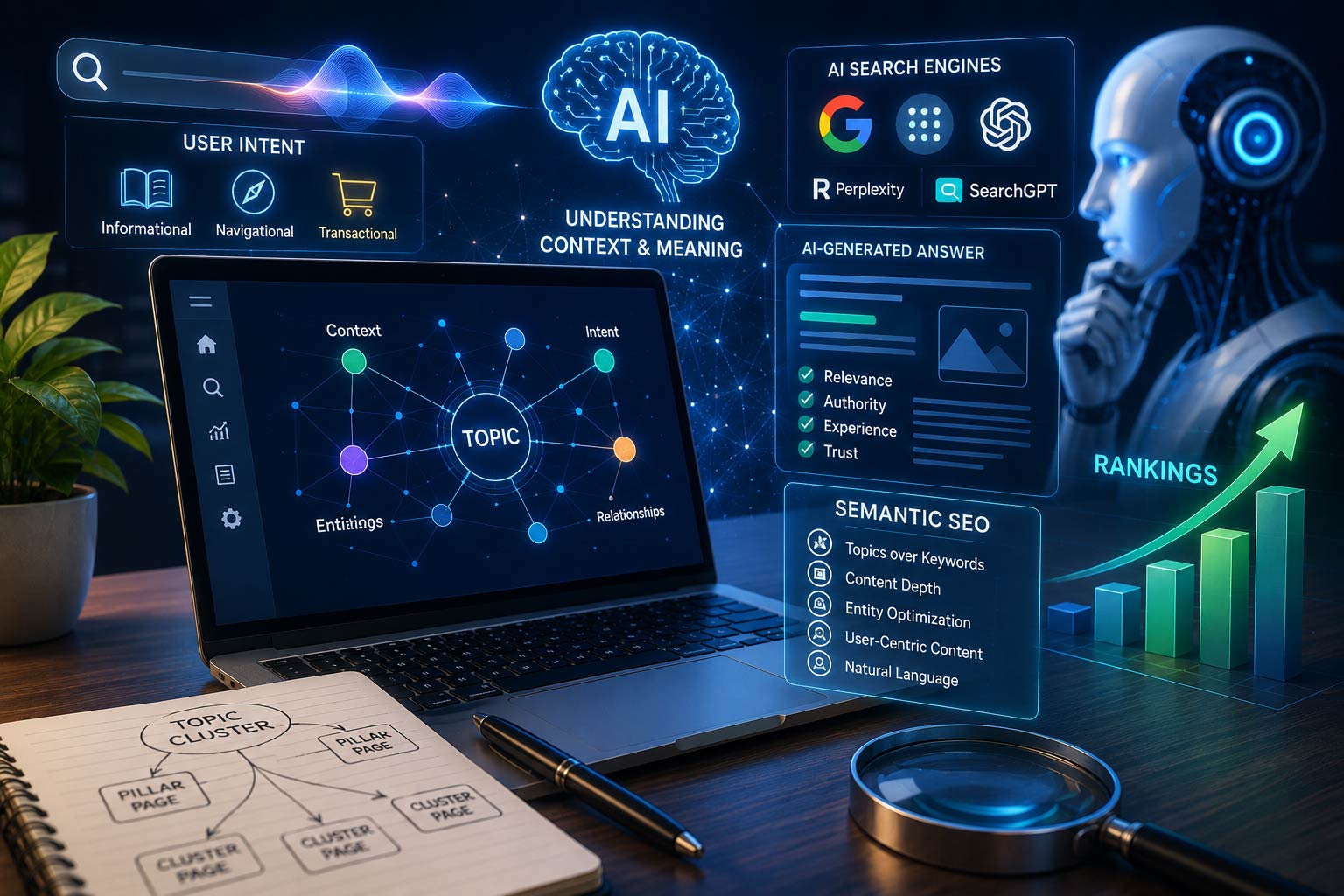
The digital marketing landscape is undergoing a massive paradigm shift. As we navigate through 2026, the traditional method of stuffing keywords into blog posts is officially obsolete. Artificial Intelligence (AI) search engines like Google Search Generative Experience (SGE), Perplexity, and OpenAI's SearchGPT are redefining how users seek information online. Instead of matching simple text queries, these modern engines understand user context, intent, and relationships between concepts—a concept known as Semantic SEO.
What is Semantic SEO and Why Does It Matter in 2026?
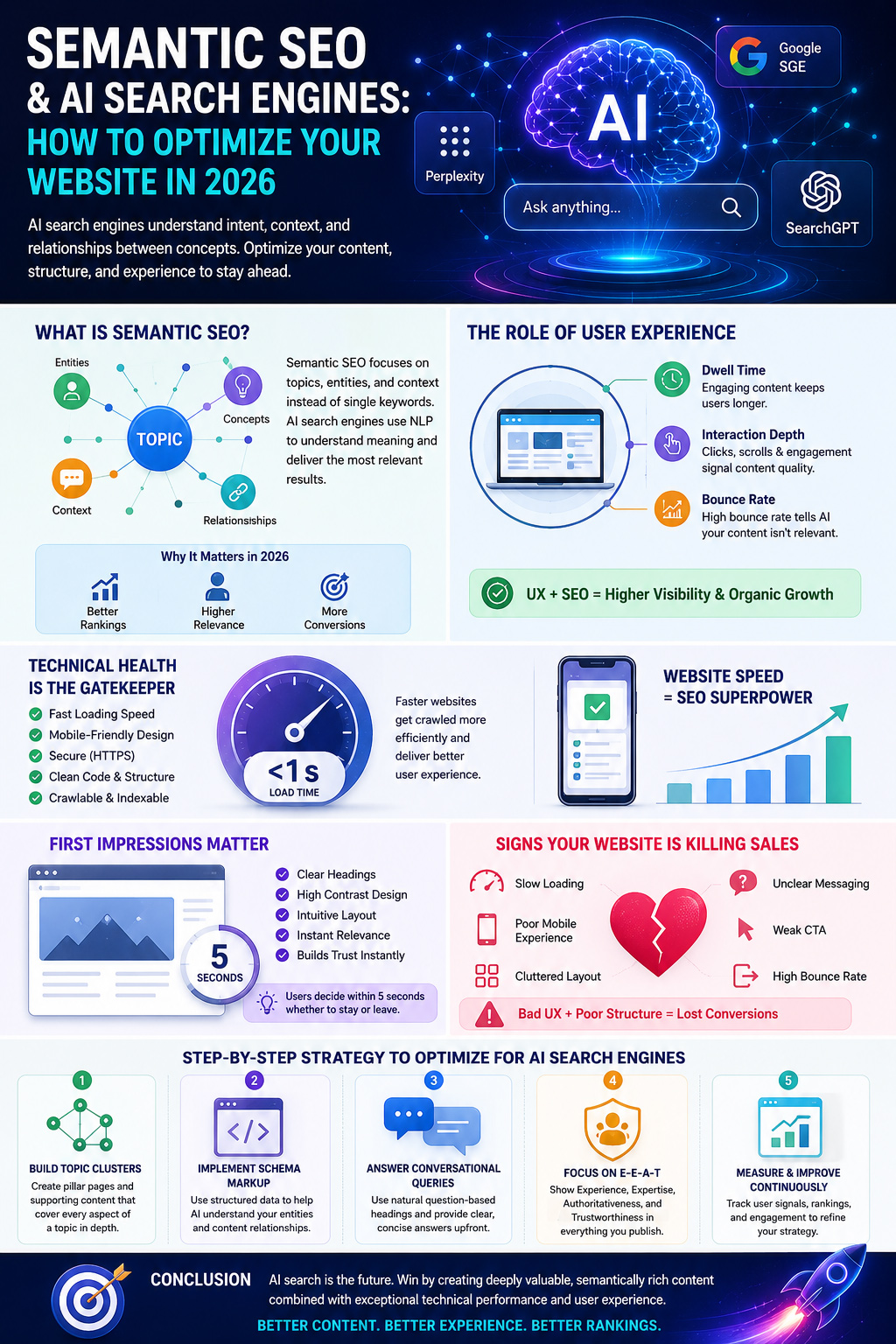
Semantic SEO is the practice of optimizing web content around topics rather than single keywords. AI search models use Natural Language Processing (NLP) to comprehend the depth of a page. They look at entities (people, places, concepts) and their relationships to deliver highly accurate answers. In 2026, if your website only targets shallow phrases, you will lose visibility to platforms that answer comprehensive questions.
Adapting to this shift requires a strategic overhaul of your website's content. You need to position your brand as an absolute authority in your niche by building thorough topical clusters rather than disjointed landing pages.
The Critical Role of User Experience in Semantic Search
Search engines no longer analyze content in isolation. User signals—such as dwell time, interaction depth, and engagement rates—are highly correlated with how AI rates your content's quality. This is where technical web design meets content optimization. Today, the convergence of UX and SEO has become the foundational pillar of organic growth. If your site is difficult to navigate or visually confusing, users will immediately bounce back to search results, signaling to AI algorithms that your content is irrelevant.
Furthermore, technical health acts as the gatekeeper for your visibility. Search bots prioritize websites that load instantly and offer flawless mobile accessibility. In fact, modern optimization shows that website speed is an absolute SEO superpower. When a web page loads under a second, crawlers can index it more efficiently, and users are vastly more likely to engage with your semantic structure.
Optimizing for First Impressions and Conversion
When users land on your site from an AI-generated answer, they expect an immediate continuation of their conversational query. You have a microscopically small window to capture their attention. Understanding what customers notice in the first 5 seconds of your website can make or break your content strategy. Clear headings, high-contrast typography, and intuitive layouts validate the user’s click instantly, keeping them on-page to digest your long-form, semantically rich content.
Conversely, failing to connect user experience with structured answers can actively destroy your conversions. If your design is cluttered, or your layout shifts unpredictably, you may fall victim to the common signs your business website is secretly killing sales. Aligning semantic content with clean design is the only way to retain the high-intent organic traffic that AI search engines send your way.
Step-by-Step Strategy to Optimize for AI Search Engines
Build Comprehensive Topic Clusters: Instead of writing five short, disconnected posts, create one massive, authoritative pillar page supported by sub-pages that cover every conceivable question related to the topic.
Implement Structured Data (Schema Markup): Schema helps AI search engines understand the relationships between your entities. Use Organization, Product, FAQ, and Article schema to explicitly define your data.
Answer Conversational Queries Directly: Organize your content using natural language headings (H2s and H3s) formulated as questions, followed by clear, direct, and concise answers in the first paragraph.
Focus on E-E-A-T: Experience, Expertise, Authoritativeness, and Trustworthiness are critical. Cite original research, quote industry experts, and keep author bios transparent.
Conclusion: Future-Proofing Your Digital Presence
As AI continues to mature, search engines will become more conversational and demanding. Succeeding in this ecosystem means abandoning legacy SEO tricks and focusing on authentic, deeply valuable, and exceptionally structured user experiences. By aligning your semantic SEO strategies with optimal technical web performance, your business can claim dominant rankings and convert curious searchers into loyal clients.
Supercharge Your Digital Strategy Today
Need help optimizing your website for AI-driven search or building a high-performance web platform that ranks? Our team of digital marketing and web development experts is here to transform your online presence.
Contact Us Now:
Phone: +91 8888 589767
Email: sales@jikut.com
Written by
Vikas Giri
Founder & Content Creator
Frequently Asked Questions
+−What is semantic SEO?
+−How do AI search engines like SearchGPT affect traditional SEO?
+−Are keywords completely useless in 2026?
+−What is Schema markup and why does it matter for AI?
+−How does website speed impact semantic search engine rankings?
+−What are topic clusters?
Comments
Loading comments...
Leave a Comment
THERE'S MORE TO READ

How Much Does Instagram Reels Editing Cost in India? (2026 Per-Video Pricing & ROI Breakdown)
A transparent 2026 breakdown of Instagram Reels editing costs in India—from ₹800 raw cuts to ₹8,000 concept-to-post packages—plus the ROI metrics that actually matter.

Zero-Click Cannibalization: Why Your Best SEO Content Is Answering Questions That Never Send You Traffic
Your best SEO content might be ranking beautifully while sending zero traffic—here's how zero-click cannibalization works and the tiered-answer framework that fights back.

Story Poll Fatigue: Why Your "Engagement Bait" Stickers Are Quietly Training the Algorithm to Bury You
Reflexive poll stickers quietly train Instagram's algorithm to bury your Stories. Learn the Friction-Value Framework to rebuild reach without engagement bait.